01 · Driveways
Driveways
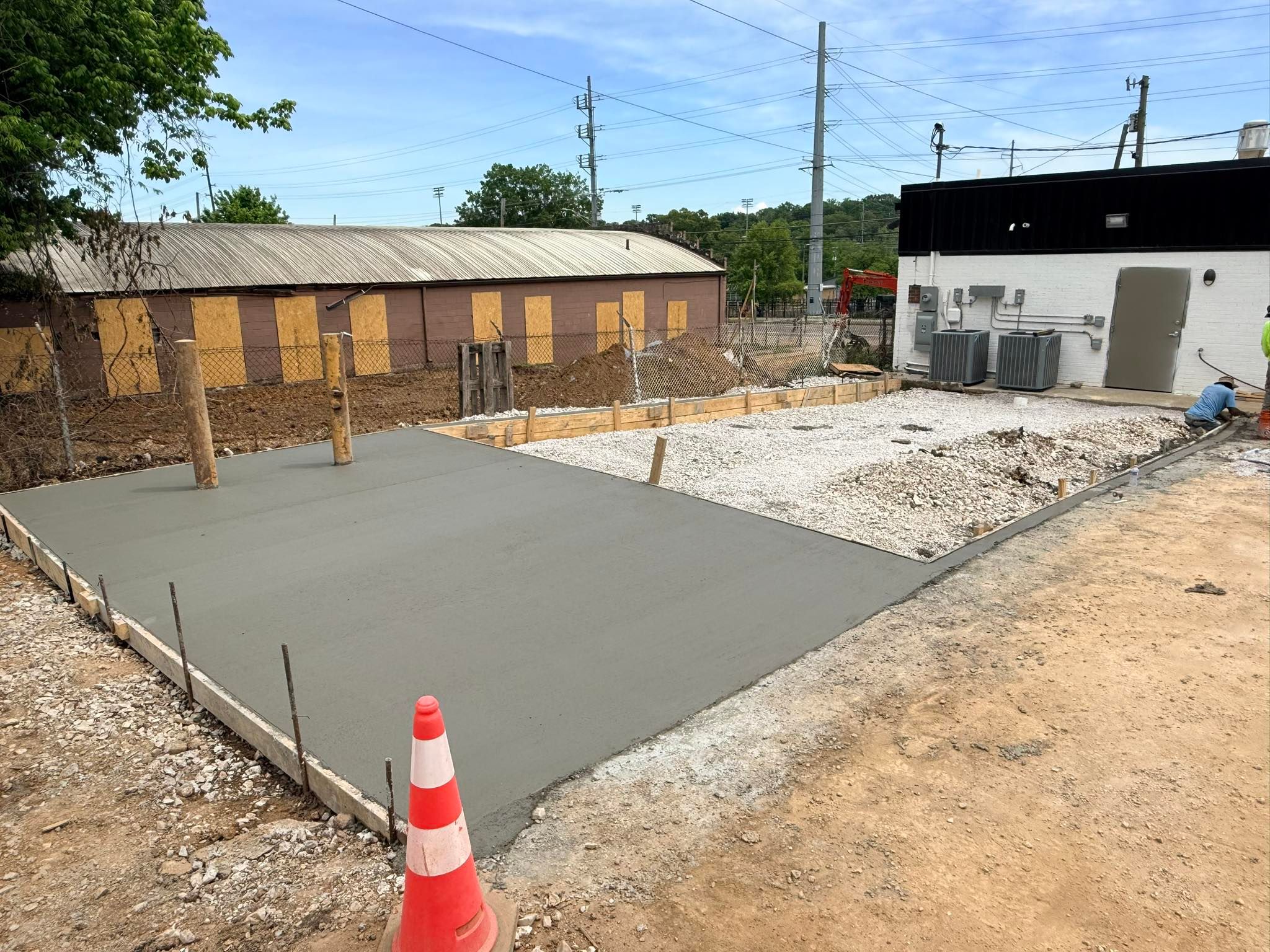
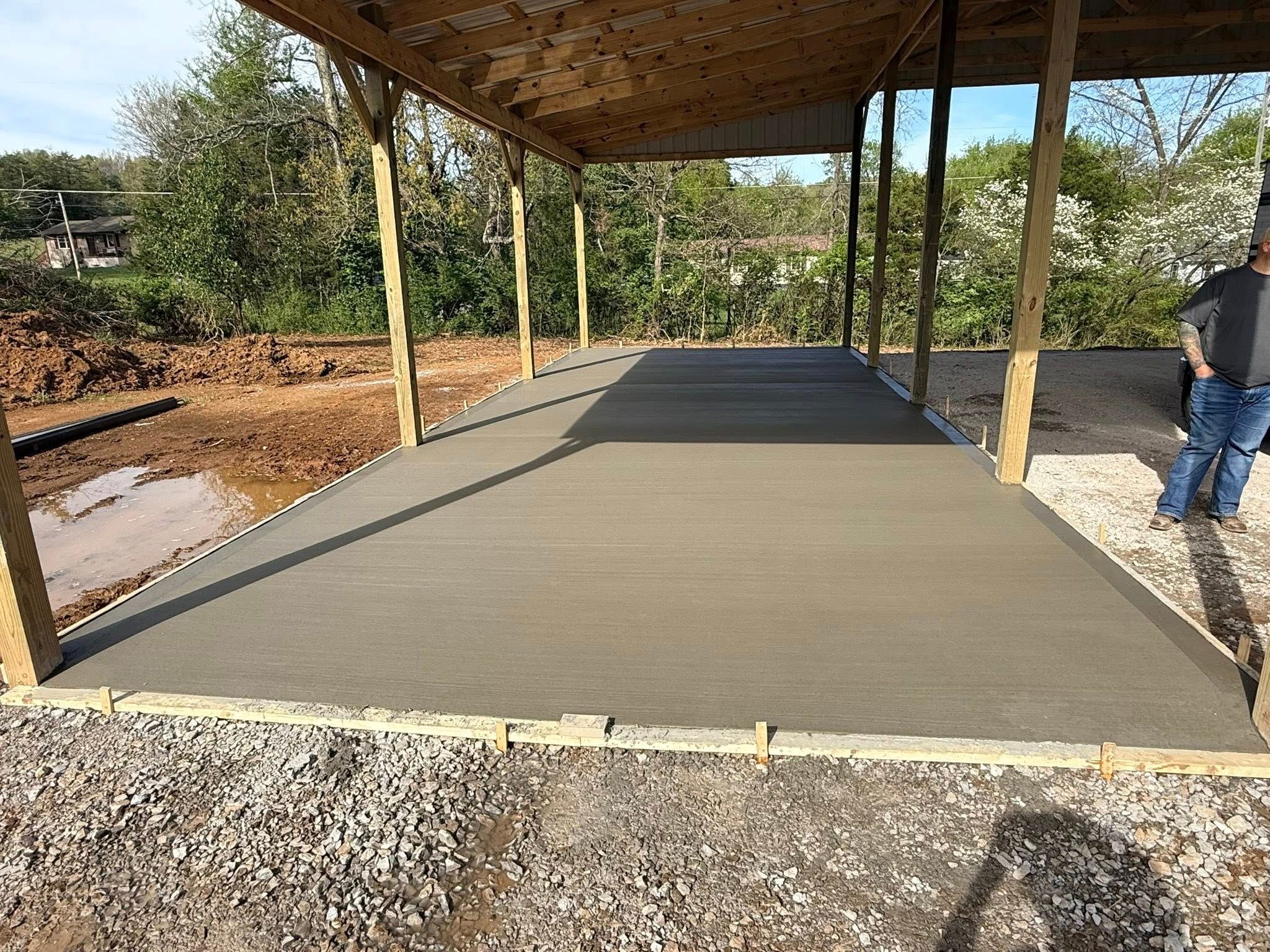
Clean driveway pours with proper base prep, straight edges, and a finish built for daily use.
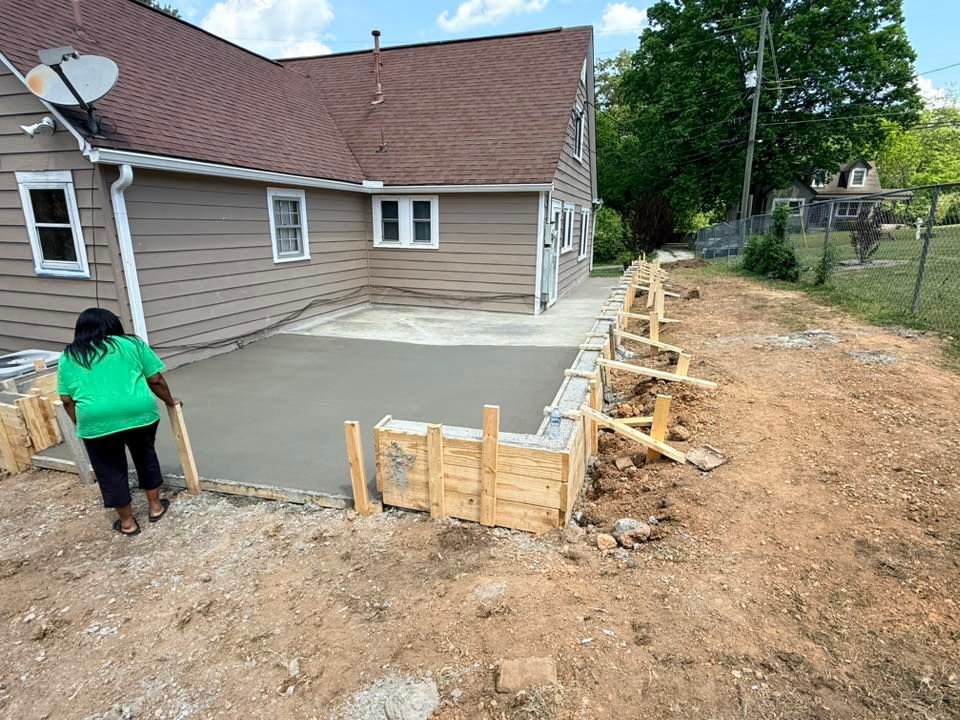
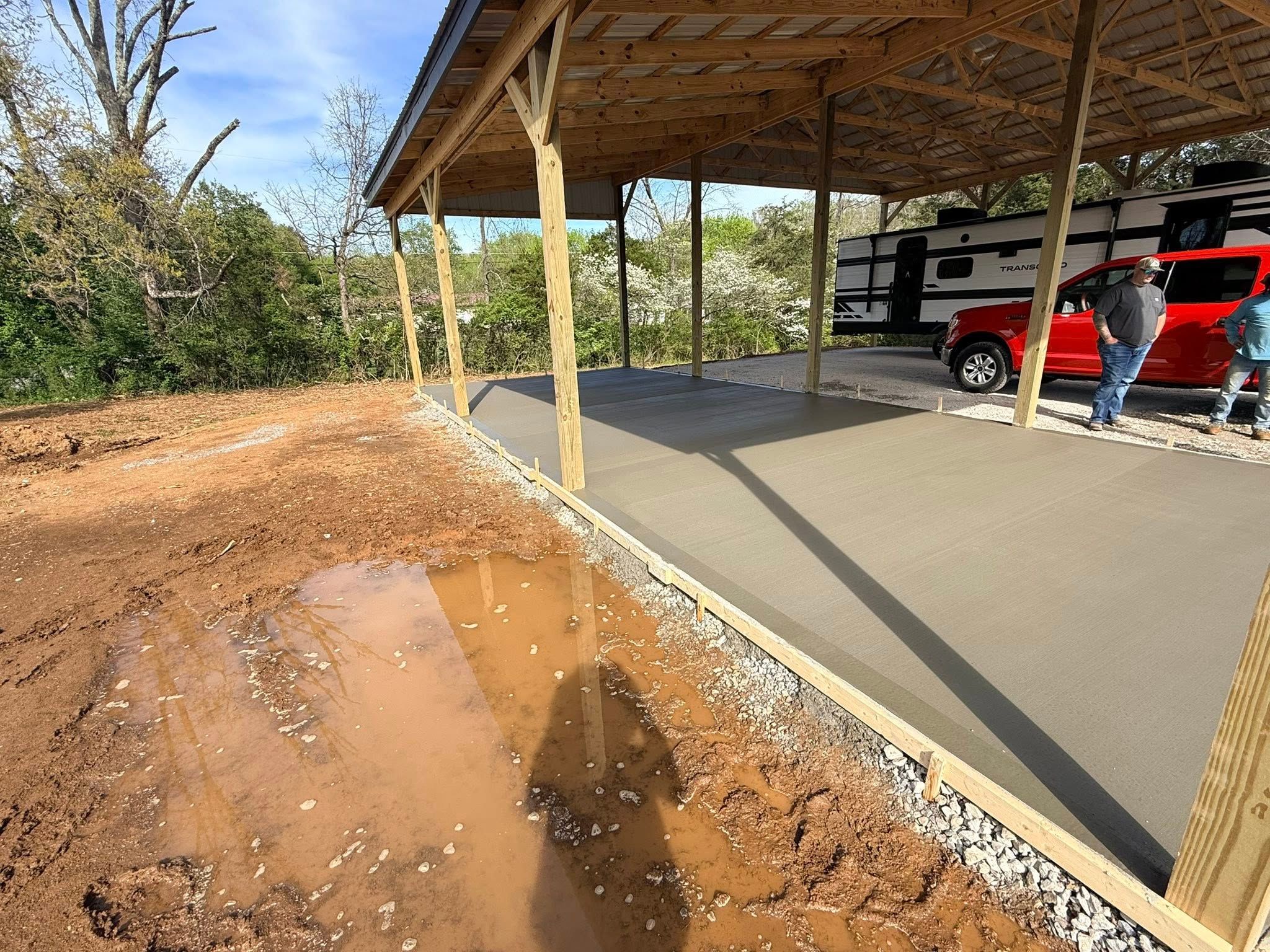
A driveway is more than a slab of concrete. It starts below the surface. We strip the topsoil, cut the area to grade, and lay a compacted gravel base before any forms go down. Skip that step and the slab cracks no matter how good the pour looks.
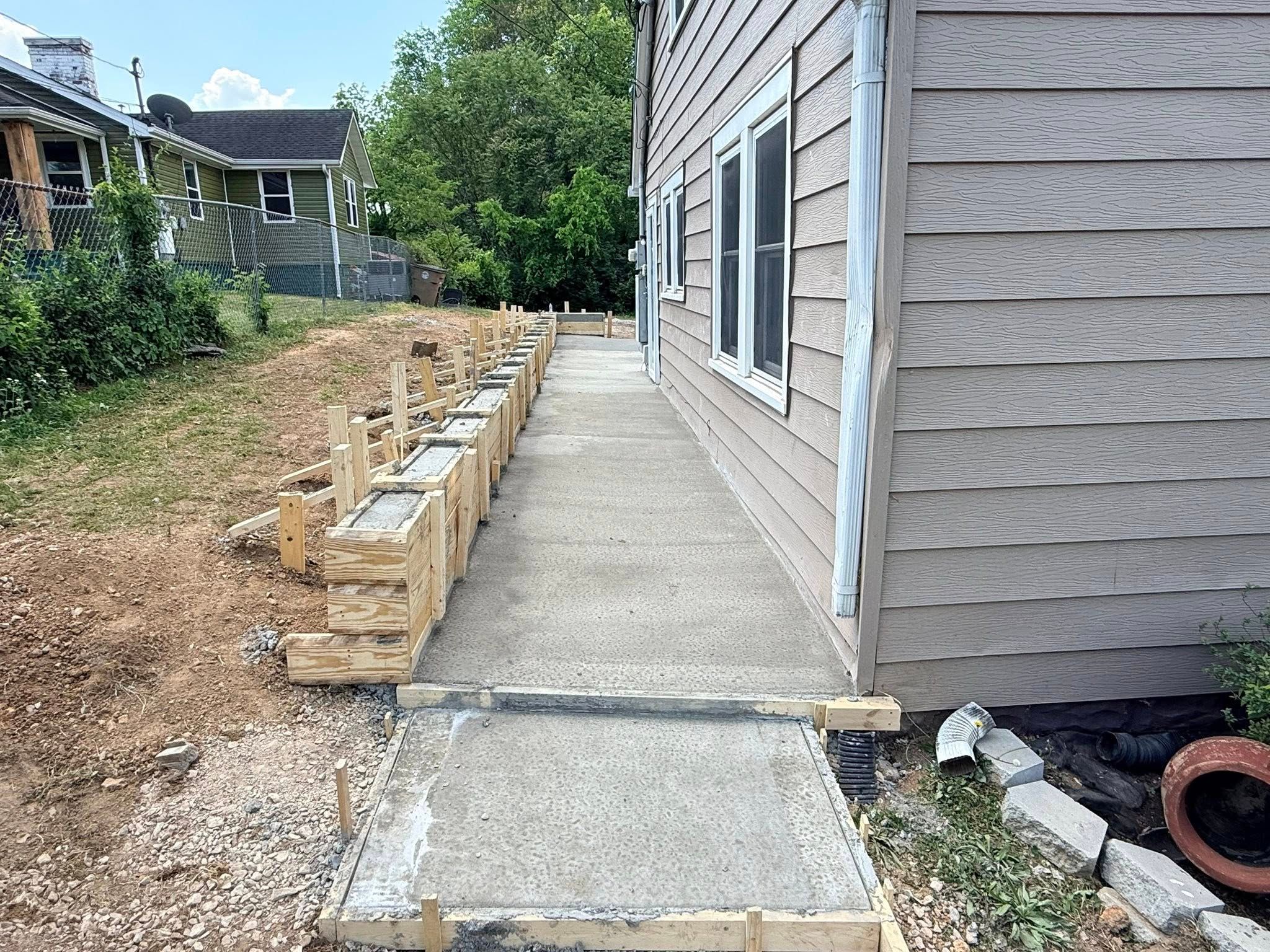
On the base we set straight forms, run rebar or welded wire mesh on chairs, and pour a 3,500–4,000 PSI mix at four inches thick (six for heavier loads). A broom finish gives daily traction and hides normal wear. We cut control joints so the slab cracks where it should — not where you have to look at it.
After the pour we protect the cure. New concrete stays damp and covered when the weather calls for it. Walk on it after about 24 hours. Light vehicles after seven days. Full strength at 28 days.
What's included
- Excavation, grading, and base prep with compacted gravel
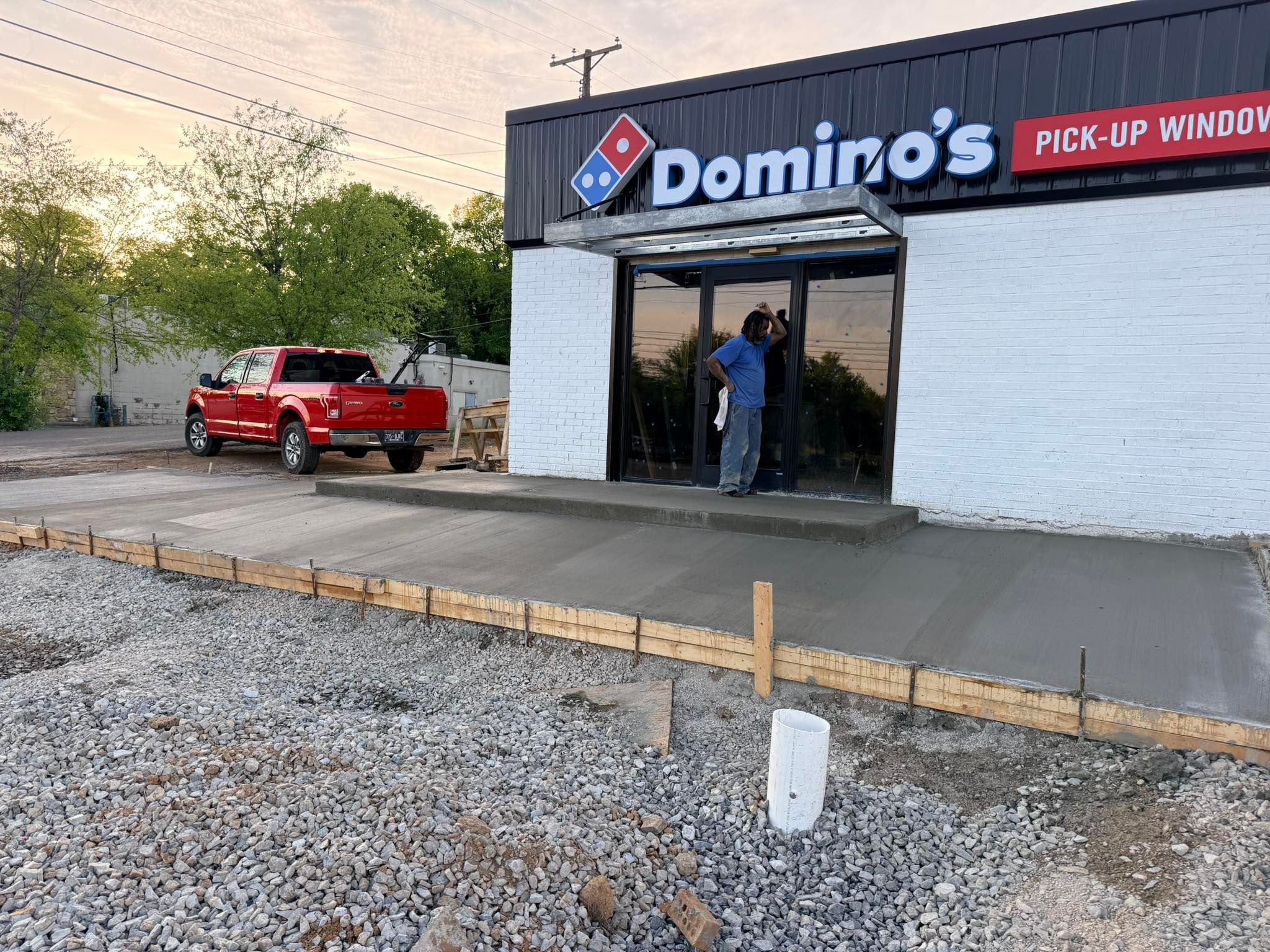
- Formwork for straight edges and clean transitions
- Rebar grid or welded wire mesh reinforcement
- Four-inch slab (six inches for heavy loads), 3,500–4,000 PSI mix
- Broom finish, control joints, and cure protection
When can I drive on it?
Walk on it after about 24 hours. Light vehicles after 7 days. Heavy trucks, RVs, or trailers wait the full 28 days when possible.
Concrete or asphalt?
Concrete costs more upfront but lasts 30–50 years with little maintenance. Asphalt is cheaper to install but needs sealcoating every 3–5 years and usually gets replaced inside 20 years.